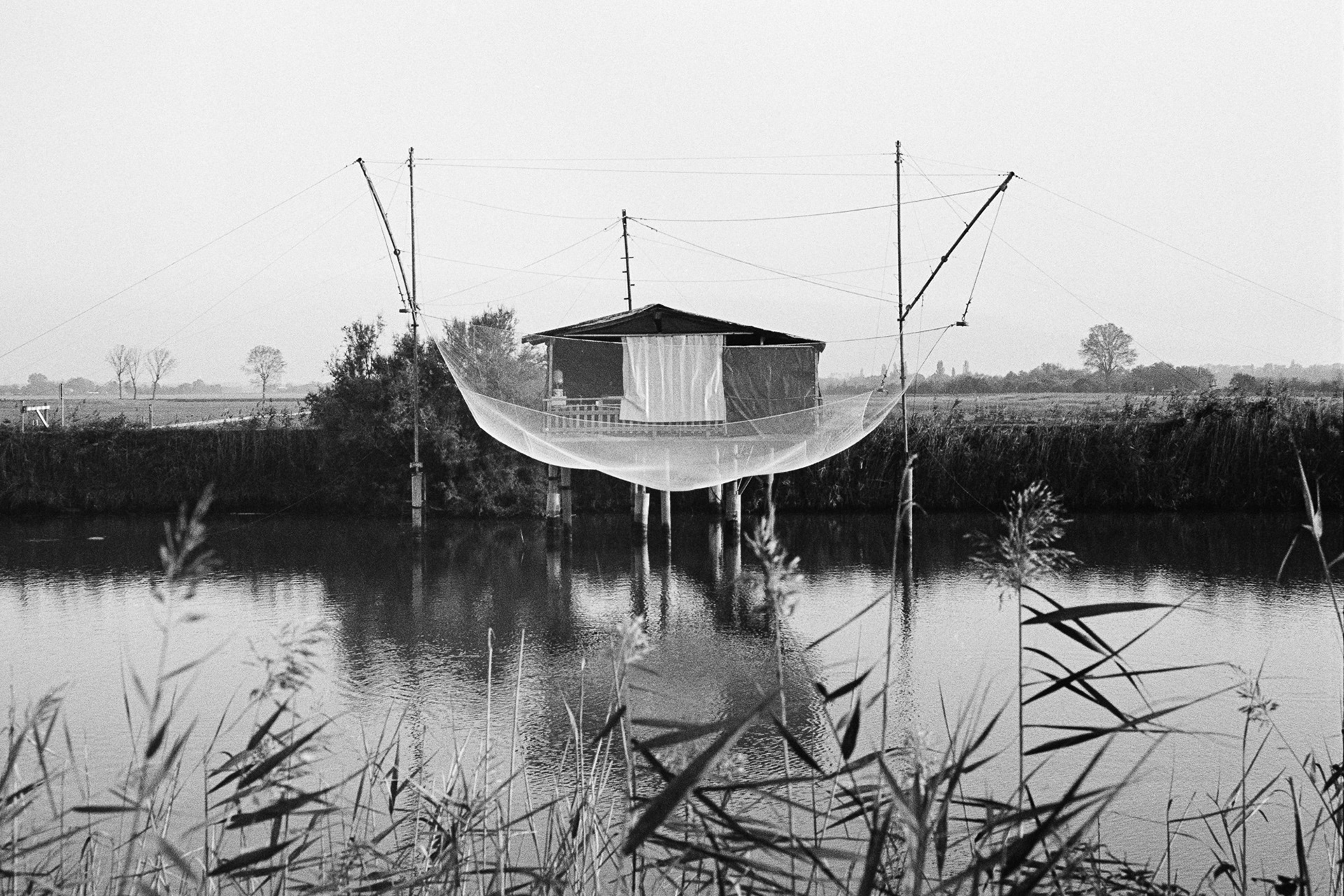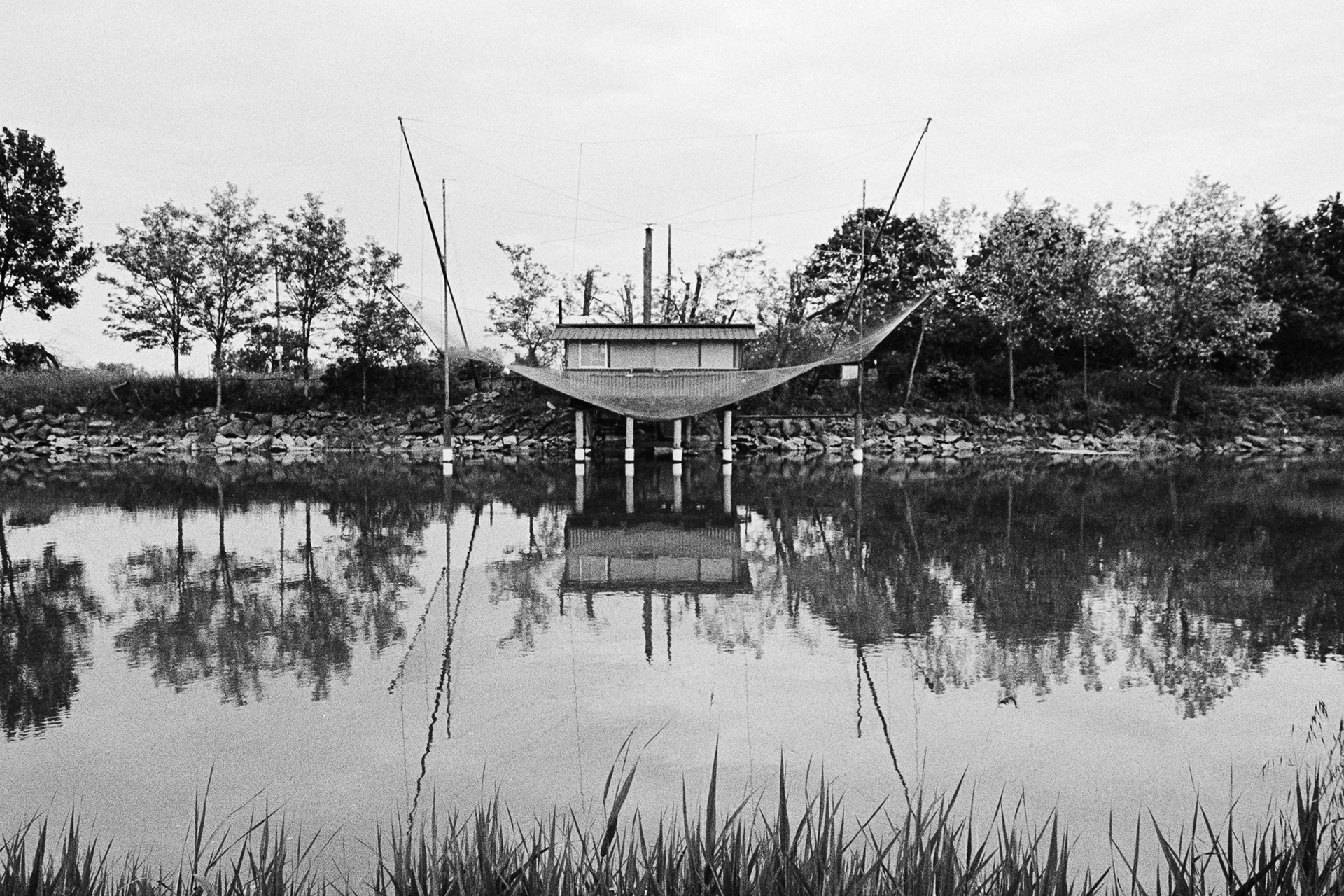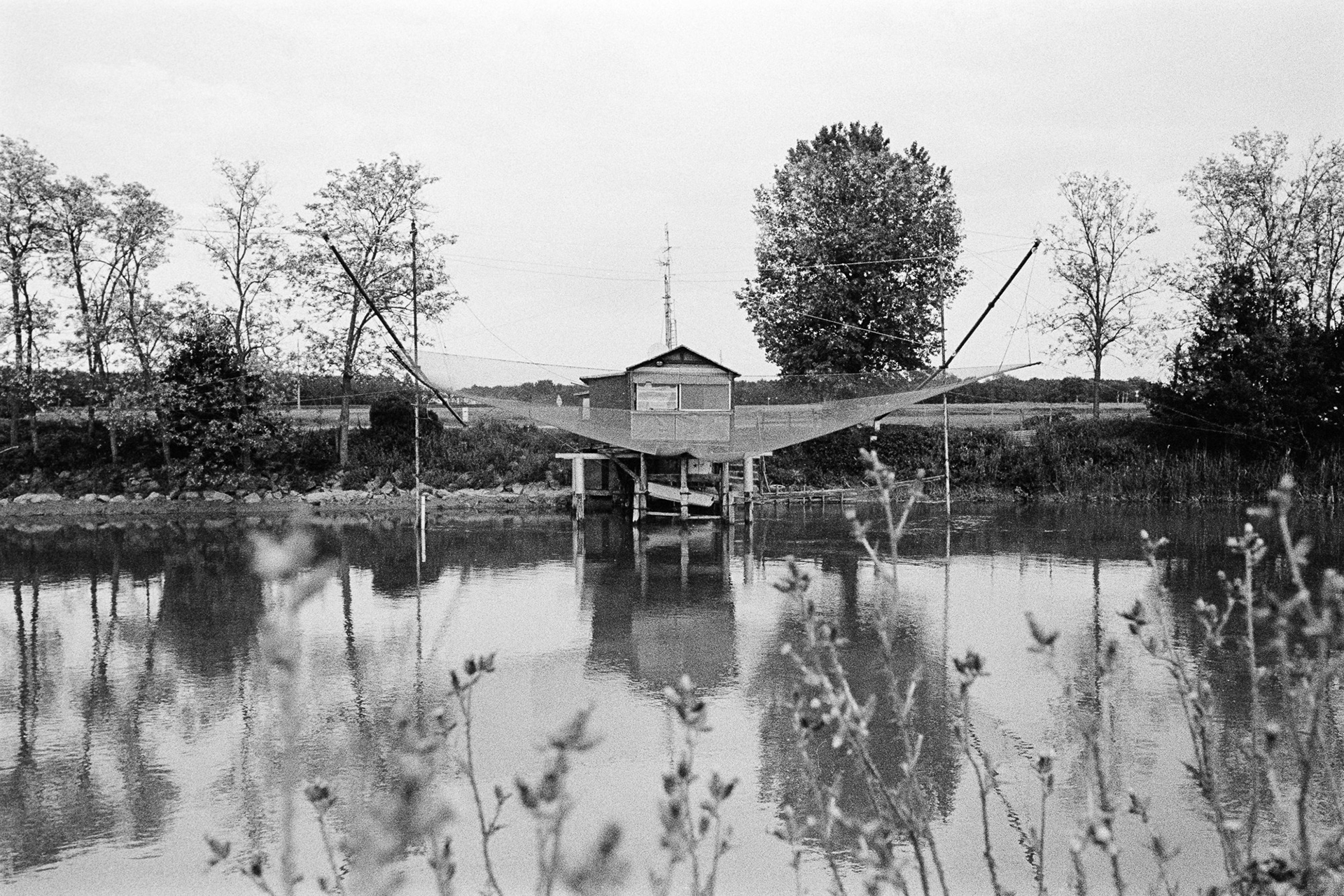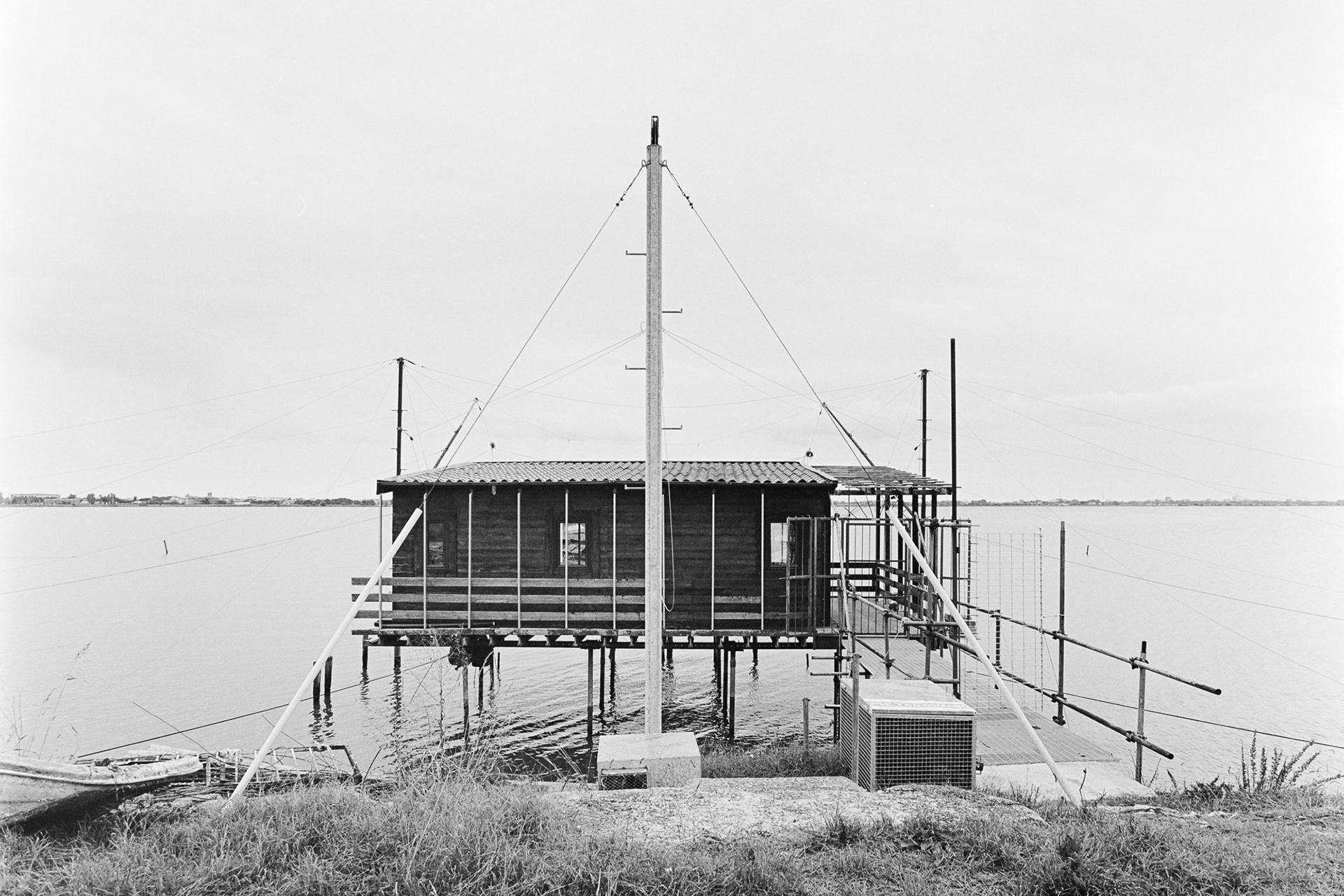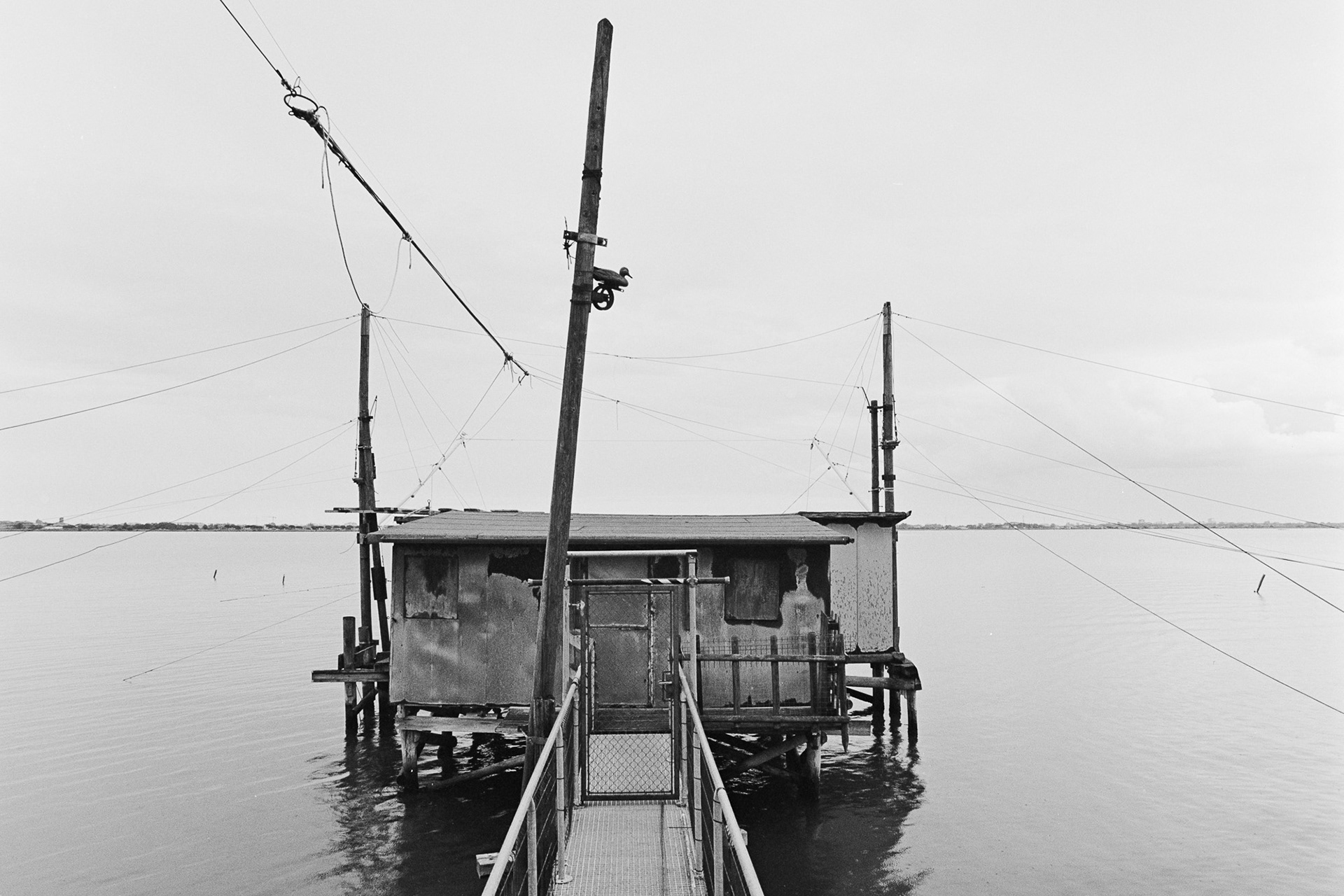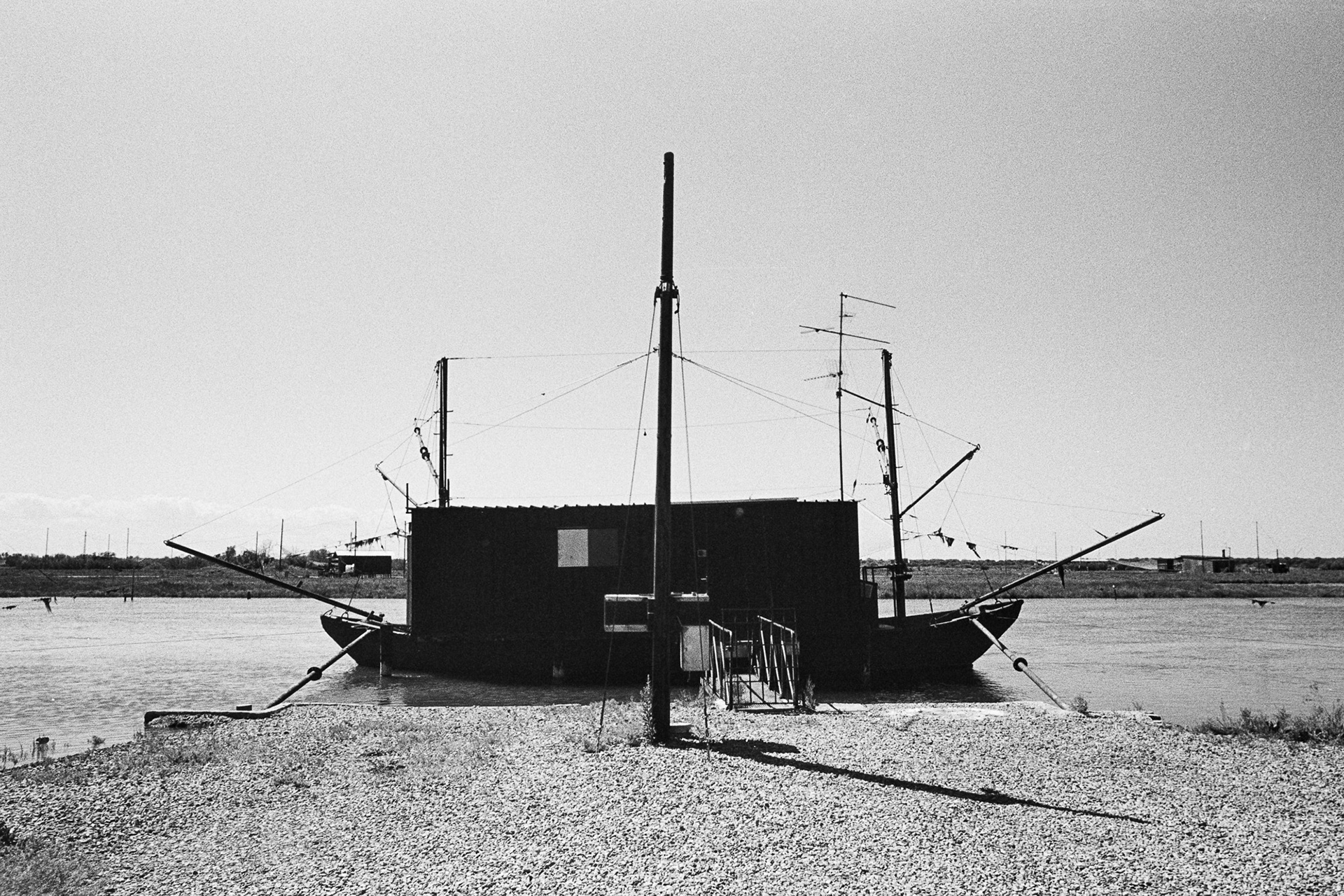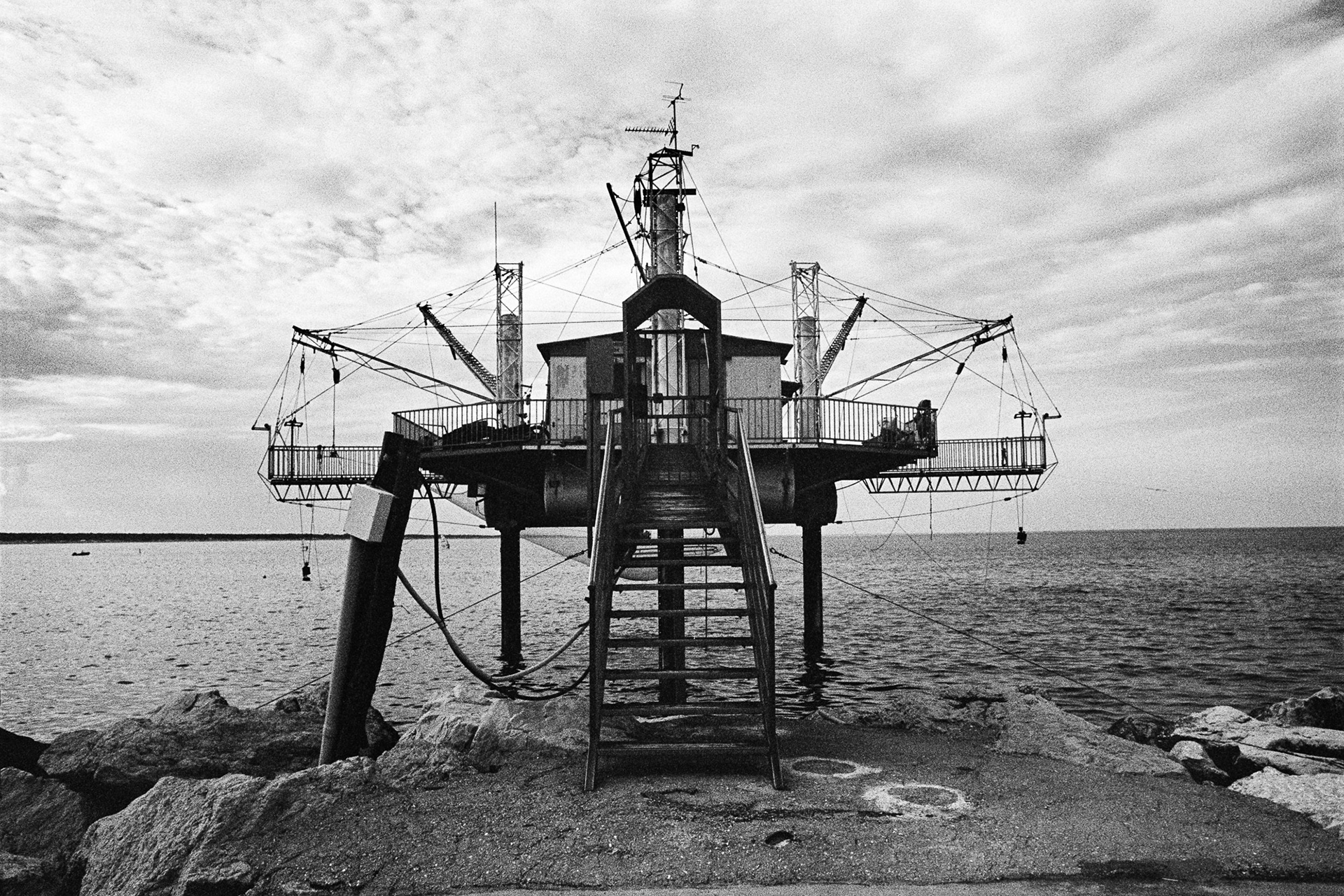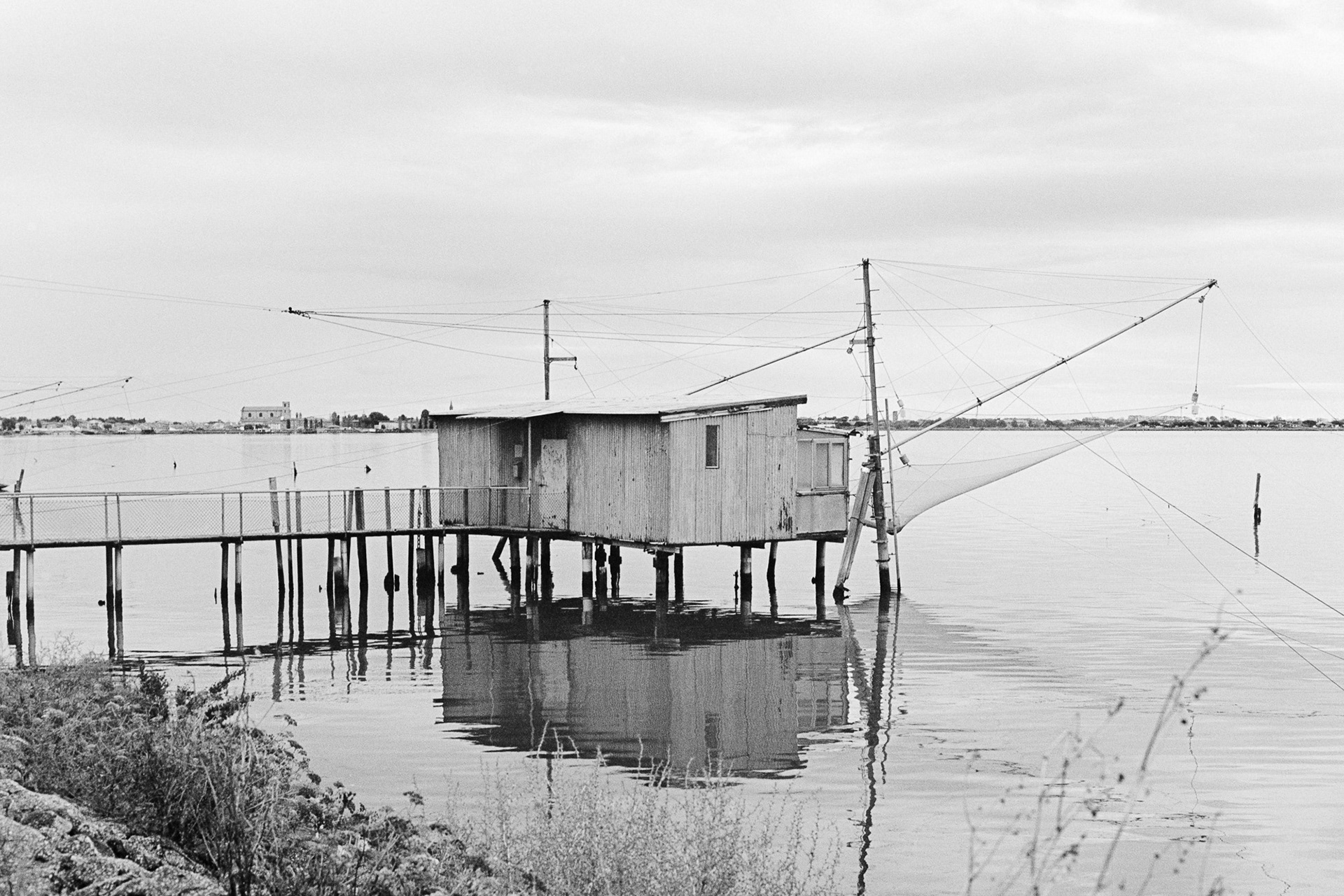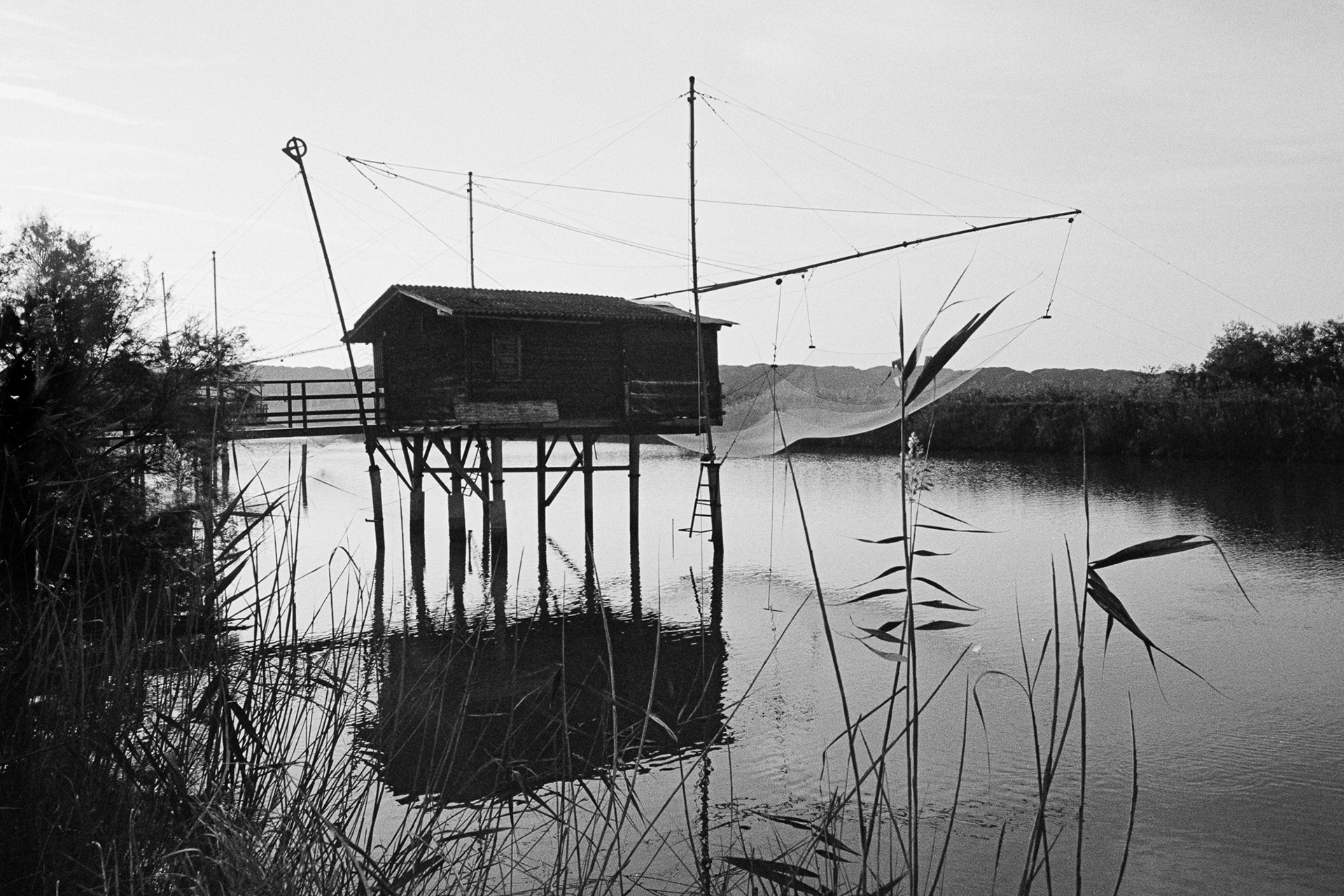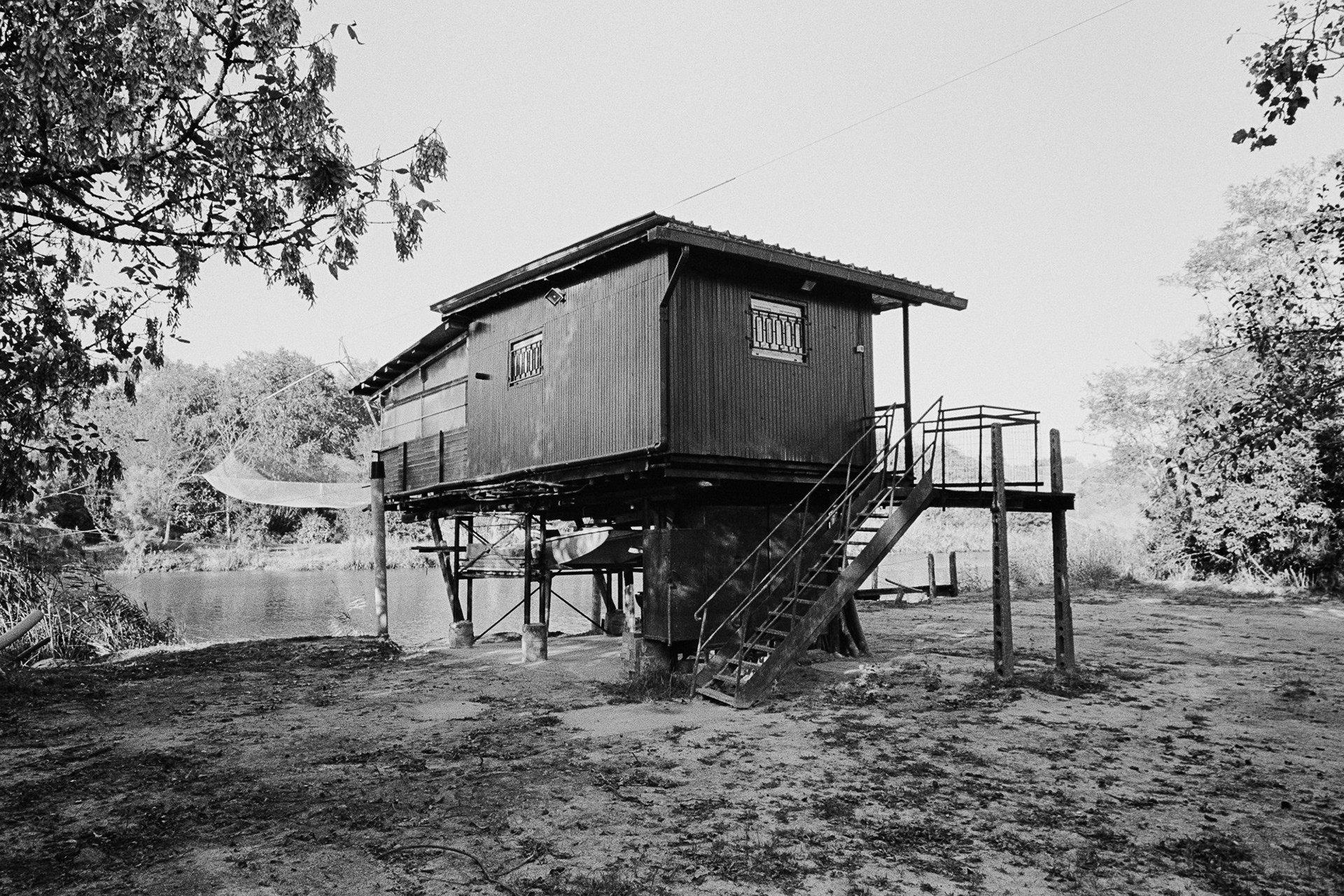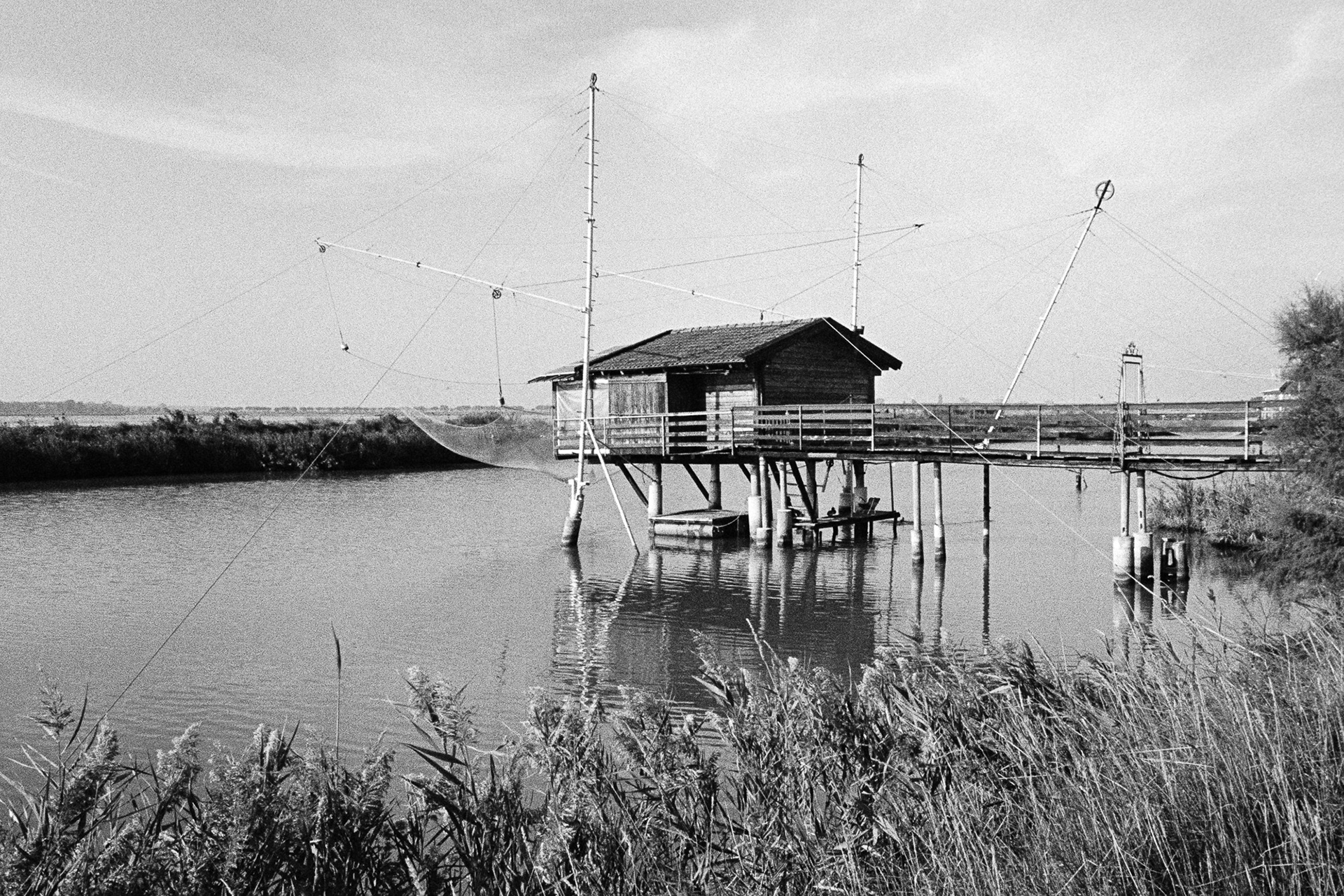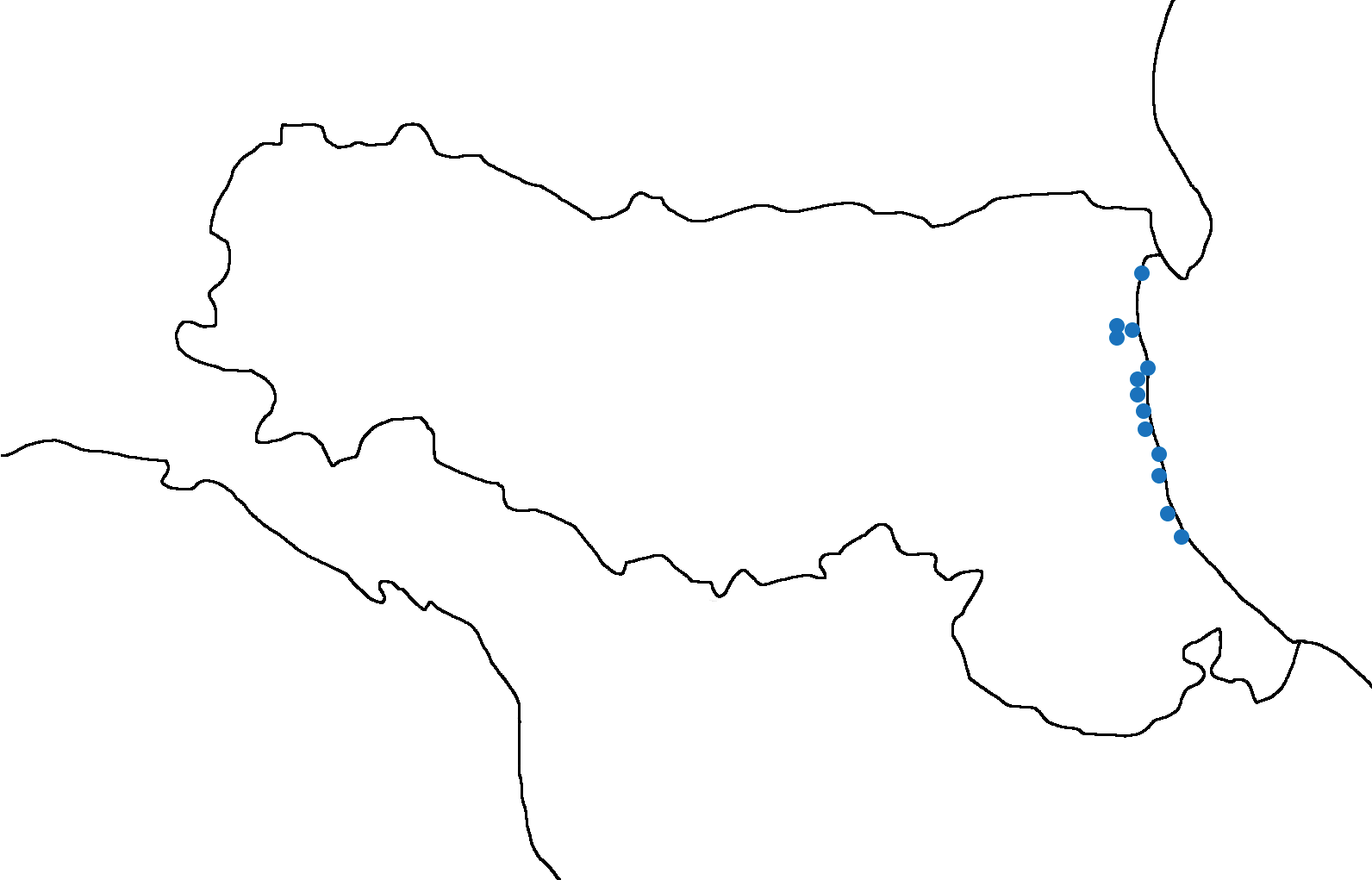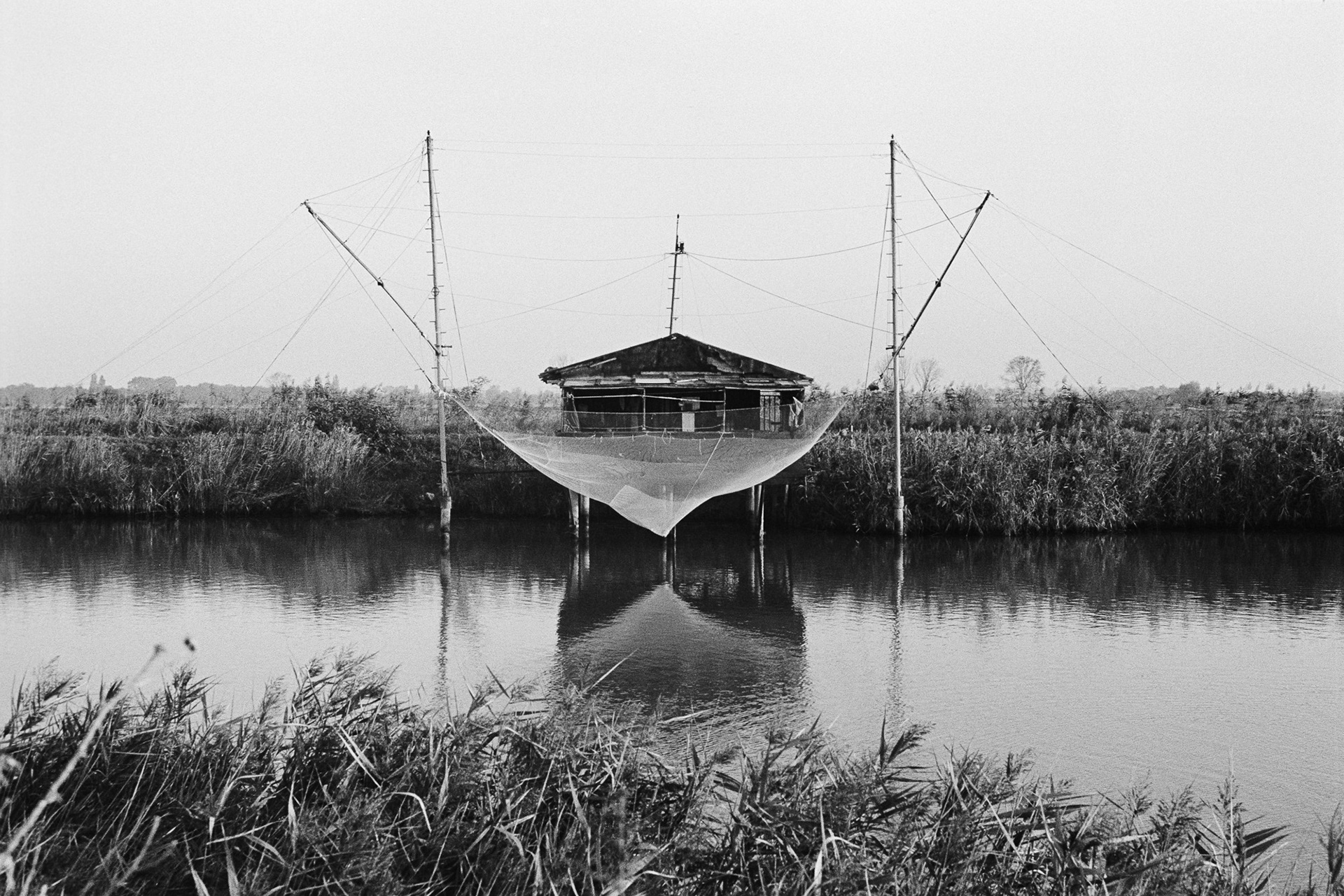
I capanni da pesca in Romagna sono circa 500. Sono strutture suggestive, spesso realizzate con materiali di fortuna; hanno forme diverse e a volte fantasiose, che sembrano trascendere il tempo ed esistere in una dimensione a parte, lontano dalla modernità e dall’industrializzazione. Questi capanni non sono solo strutture utilitarie, ma raccontano una cultura popolare fatta di gesti ripetuti, di stagioni che si susseguono, di famiglie che si tramandano la passione per la pesca e per la vita a contatto con l’acqua.
Attratto dalla loro semplicità, negli ultimi anni ho percorso le zone in cui si trovano per osservarli e fotografarli così come sono, all’interno del loro ambiente, testimoni di un rapporto intimo tra uomo e paesaggio che oggi rischia di scomparire, ma anche di uno stile di vita lento e silenzioso.
-----
(ENGLISH)
There are around 500 fishing huts in Romagna. They are evocative structures, often made with improvised materials; they take on different and sometimes imaginative forms that seem to transcend time and exist in a dimension of their own, far removed from modernity and industrialization. These huts are not merely utilitarian structures, but tell the story of a popular culture shaped by repeated gestures, the changing seasons and families who pass down a passion for fishing and for a life lived in close contact with water.
Drawn by their simplicity, in recent years I have traveled the areas where they are found to observe and photograph them as they are, within their environment, witnesses to an intimate relationship between man and the landscape that today risks disappearing, but also to a slow and silent way of life.